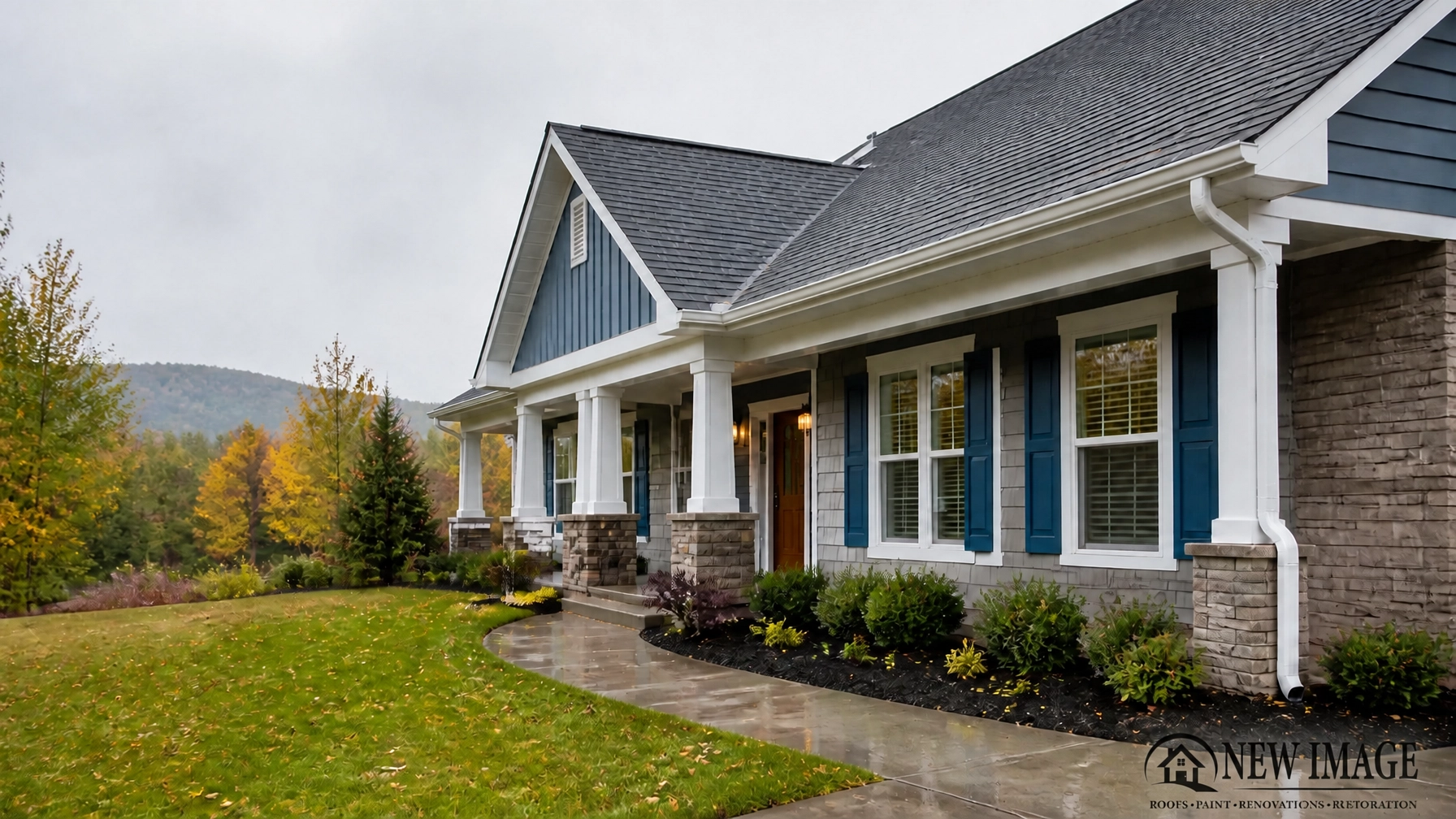
Your roof protects more than the structure above your head. It protects your family, your belongings, and the peace of mind that comes from knowing your home can handle Georgia’s heat, humidity, heavy rain, hail, and high winds. For many homeowners in Cobb, Paulding, Polk, Bartow, and Douglas counties, metal roofing is becoming a practical long-term alternative to asphalt shingles.
Metal roofing costs more upfront, but it can offer a longer service life, strong storm performance, and improved energy efficiency. Here is what you should know before choosing a metal roof for your home in Marietta, Dallas, Cartersville, Douglasville, Cedartown, Kennesaw, Acworth, Hiram, Villa Rica, or a surrounding community.
1. Why Metal Roofing Performs Well in Northwest Georgia
Northwest Georgia experiences hot summers, high humidity, intense sunlight, heavy rainfall, and frequent thunderstorms. These conditions can accelerate shingle aging and expose weak points in flashing, ventilation, and roof drainage.
Metal roofing addresses several of these challenges:
- Moisture resistance: Properly installed metal does not rot, absorb water, or lose granules during heavy rain.
- Heat performance: Reflective finishes can reduce solar heat gain compared with dark asphalt shingles.
- Storm durability: A tested, properly fastened metal system can provide strong resistance to wind uplift.
- Low maintenance: Metal is not vulnerable to common shingle problems such as curling, blistering, and widespread granule loss.
- Fire resistance: Many complete metal roof assemblies qualify for Class A fire ratings when installed with approved underlayment and decking systems.
Metal roofing is not indestructible. Large hail can dent certain panels, and poor installation can lead to leaks or wind damage. The material performs best when the system is designed for your home’s roof slope, wind exposure, ventilation, and flashing details.
2. Metal Roofing Materials and Finishes

You have several metal roofing options. The right choice depends on your budget, roof design, appearance preferences, and how long you expect to remain in the home.
Standing-seam metal roofing uses long panels with raised seams and concealed clips or fasteners. Because the fasteners are protected beneath the seams, this system offers a clean appearance and reduces exposure to weather. Standing seam is often selected for long-term residential and commercial applications.
Exposed-fastener panels attach directly to the roof deck or framing with visible screws. They are usually more affordable and can be installed efficiently, but the fasteners and rubber washers remain exposed to weather. Over time, those components may require inspection or replacement.
Metal shingles and tiles are formed to resemble traditional roofing materials. They may be a good fit if you want the durability of metal without changing the architectural character of your home.
Common material choices include:
- Galvanized or galvalume steel: Strong, versatile, and widely used for residential roofing.
- Aluminum: Lightweight and naturally resistant to corrosion, which can be useful in certain environments.
- Copper: A premium material with a distinctive appearance and exceptional longevity, but a significantly higher cost.
The finish matters as much as the metal underneath. Ask about the coating system, color-fade protection, corrosion resistance, and the difference between the manufacturer’s paint warranty and the contractor’s workmanship warranty. A light-colored or reflective finish can also support better summer energy performance.
3. Metal Roofing Cost Compared With Asphalt Shingles
The upfront price is the most important difference for many homeowners. For a typical 2,000-square-foot roof surface in Georgia, broad installed ranges may look like this:
| Roofing system | Approximate installed range | Typical service life |
|---|---|---|
| Architectural asphalt shingles | $9,800–$16,500 | 20–30 years |
| Impact-resistant asphalt shingles | $11,000–$19,500 | Approximately 25–30+ years |
| Exposed-fastener metal panels | $14,000–$20,000 | Approximately 30–40 years |
| Standing-seam metal roofing | $18,000–$28,000+ | Approximately 40–70 years |
| Metal shingles or tiles | $18,000–$35,000 | Approximately 40–60+ years |
These are planning ranges, not a guaranteed estimate. Roof pitch, valleys, dormers, chimneys, skylights, decking repairs, tear-off requirements, access, and material selection can change the final cost.
For current Georgia cost-planning information, you can review resources such as Modernize’s Georgia roofing cost guide and This Old House’s Georgia roof replacement overview.
Metal roofing often costs about twice as much as standard asphalt shingles at installation. However, the comparison changes when you consider the full service life. If you install a metal roof and remain in your home for decades, you may avoid one or more future shingle replacements.
4. Longevity and Lifetime Value
A well-installed architectural shingle roof may last approximately 20 to 30 years in Georgia. High heat, attic ventilation problems, severe weather, and repeated repairs can shorten that range.
A properly designed steel or aluminum metal roof may last approximately 40 to 70 years. The exact lifespan depends on the metal type, coating, installation quality, ventilation, maintenance, and exposure.
If you notice fading, surface corrosion, loose trim, or deteriorating fasteners, prompt attention is essential. Small issues can allow water behind the panels and damage decking, insulation, or framing.
You should also compare warranties carefully. A metal roof may include:
- A manufacturer’s material warranty.
- A paint or finish warranty.
- A contractor workmanship warranty.
- Product-specific wind or weather performance documentation.
The longest warranty is not automatically the best warranty. Ask what is covered, who performs repairs, and whether the warranty transfers if you sell the property.
5. Energy Efficiency in Georgia’s Hot Summers

Metal roofing can help reduce heat gain when paired with the right finish, underlayment, insulation, and attic ventilation. A reflective surface sends more solar energy away from the roof than a dark, weathered shingle surface.
However, the roof alone does not determine your energy bills. If your attic lacks adequate insulation or ventilation, changing roofing materials may not produce the improvement you expect.
For the best results, your contractor should evaluate:
- Attic insulation levels.
- Ridge, soffit, and other ventilation.
- Roof color and solar reflectance.
- Underlayment and thermal movement details.
- Existing ductwork and air leaks.
If your upstairs rooms become excessively hot during July and August, a roofing inspection combined with an attic evaluation can help identify the real cause.
6. Hail and Wind Resistance

Severe thunderstorms are a crucial consideration in Northwest Georgia. Metal roofing generally provides stronger resistance to wind and hail-related surface damage than standard asphalt shingles, although no roofing material is completely hail-proof.
Large hail may dent a panel without creating an immediate leak. With asphalt shingles, hail can break the mat, remove protective granules, or create damage that is difficult to see from the ground.
Wind performance depends heavily on installation. Ask whether the selected system has documented testing under standards such as UL 580, UL 1897, or FM 4474. Fastener type, clip spacing, edge details, and corner reinforcement all matter because roof edges experience higher uplift forces.
Georgia’s building requirements also address roof assemblies and wind design. You can review the Georgia residential roof assembly provisions and building planning requirements. Your contractor should confirm the requirements enforced by your local jurisdiction before installation begins.
7. What the Metal Roof Installation Process Looks Like

A professional metal roof installation typically follows these steps:
- Inspection and measurements: Your contractor evaluates roof pitch, decking, ventilation, flashing, and structural conditions.
- Material selection: You choose the panel profile, metal type, finish, trim, and accessories.
- Permitting and planning: The project is coordinated with local requirements and manufacturer installation specifications.
- Tear-off and deck inspection: Existing roofing is removed when necessary, and damaged decking is replaced.
- Underlayment installation: The roof receives a moisture barrier, with enhanced protection at valleys, penetrations, and eaves.
- Flashing and ventilation work: Chimney, wall, skylight, ridge, and valley details are installed or upgraded.
- Panel installation: Panels, clips, fasteners, and trims are installed according to the system’s wind and slope requirements.
- Final inspection and cleanup: The crew checks alignment, fastening, flashing, sealants, debris, and the surrounding property.
A typical residential project may take several days to a week, depending on roof size, weather, complexity, and the amount of decking repair required.
8. Is Metal Roofing Right for Your Home?
Metal roofing may be a strong fit if you:
- Plan to remain in your home for 15 years or longer.
- Want to reduce the frequency of future roof replacements.
- Live in an area exposed to recurring hail and thunderstorms.
- Prefer a modern, clean, or distinctive roof appearance.
- Want to consider reflective materials for summer heat control.
- Are willing to invest more upfront for potential long-term value.
Asphalt shingles may remain the better choice if your immediate budget is limited or you expect to move soon. Impact-resistant shingles can also provide a practical middle ground between standard shingles and metal.
The best decision starts with an honest inspection and a detailed comparison of materials, warranties, roof conditions, and long-term goals. New Image AI provides roofing services for homeowners and businesses throughout Cobb, Paulding, Polk, Bartow, and Douglas counties. Our team offers metal roofing installations, roof replacements, repairs, and restoration services with no high-pressure sales approach.
To discuss your roof, call 678.444.4901 or visit New Image AI. You can also view examples of completed work in the New Image project gallery.
A properly installed metal roof can provide decades of protection, improved storm performance, and lasting value. With the right system and experienced installation, you can make a confident investment in your Northwest Georgia home.
#NewImageRoofs #NewImagePainting #NewImageConstruction #NewImageRenovation #NewImageRestoration #SouthMark #NewImageAI