A storm can turn your home’s roof, windows, and exterior into urgent concerns in a matter of minutes. Acting carefully in the first 24 to 48 hours can help protect your family, limit further damage, and give you a clearer record for your insurance claim.
If hail, high winds, fallen trees, or heavy rain have affected your home in Cobb, Paulding, Polk, Bartow, or Douglas County, follow these steps. Your first priority is safety, not getting onto the roof to see what happened.
First, make sure everyone is safe
Wait until the storm has passed and local authorities say it is safe to go outside. Keep away from downed power lines, damaged trees, loose roof materials, and any part of the home that appears unstable. Do not enter a room or building if you suspect structural damage.
If there is immediate danger or someone is injured, call 911. Report downed power lines to the utility company or local authorities. The National Weather Service offers severe-weather safety guidance for Georgia residents.
If water is coming into your home, move people and belongings away from the affected area. Place a bucket under an active leak if you can do so safely. Do not touch wet electrical fixtures or equipment.
Document what you can see, without climbing
Once it is safe, take photos and video before cleanup or temporary repairs. Capture wide views of the property as well as close-ups of visible damage. Include the roof from the ground, gutters, siding, windows, interior ceilings and walls, fallen branches, and damaged belongings.
Write down the storm date and time, where you noticed damage, and when you first saw water entering the home. Keep damaged items and materials where safe, so they can be reviewed later. Save receipts for emergency work, cleanup, materials, and other storm-related expenses.
Do not climb onto a roof or use a ladder to inspect it. A roof may be slippery, unstable, or weakened even if the damage looks minor from the ground. A qualified professional can inspect areas you cannot safely reach.
Know the warning signs of roof damage
A roof can be damaged even when shingles have not blown off. From the ground, look for missing, torn, lifted, or uneven shingles; debris on the roof; damaged ridge caps; and visible dents or impact marks. If you find shingle pieces or an unusual concentration of granules near downspouts, photograph them. Granule loss can be a clue, but it can also result from age and wear, so it does not prove hail damage on its own.
These checks apply whether your roof uses shingles from Owens Corning, GAF, CertainTeed, or IKO. A manufacturer’s name does not make storm damage easy to confirm from the ground: the roof’s condition, installation, and the storm itself all matter. A professional inspection can help distinguish possible storm damage from ordinary aging.
Inside, look for new ceiling stains, damp drywall, peeling paint, or a musty smell. If you notice these signs after a storm, water may be entering through the roof or another opening. Prompt attention matters because trapped moisture can damage insulation and building materials.
For homeowner guidance, see Owens Corning’s Roof Smarter resource.

Check gutters, siding, and windows
From a safe position, look for gutters that are bent, detached, dented, or clogged with storm debris. Check whether downspouts have pulled away from the home or are discharging water close to the foundation. Damaged drainage can direct water toward the home instead of away from it.
Inspect siding for cracks, holes, loose panels, or areas where wind-driven rain may have entered. Look at window glass, frames, and seals for cracks, broken panes, or gaps. If a window is broken, keep people away from the glass and arrange safe temporary protection. Do not attempt repairs that require working at height or handling unstable materials.
Take these steps in the first 24 to 48 hours
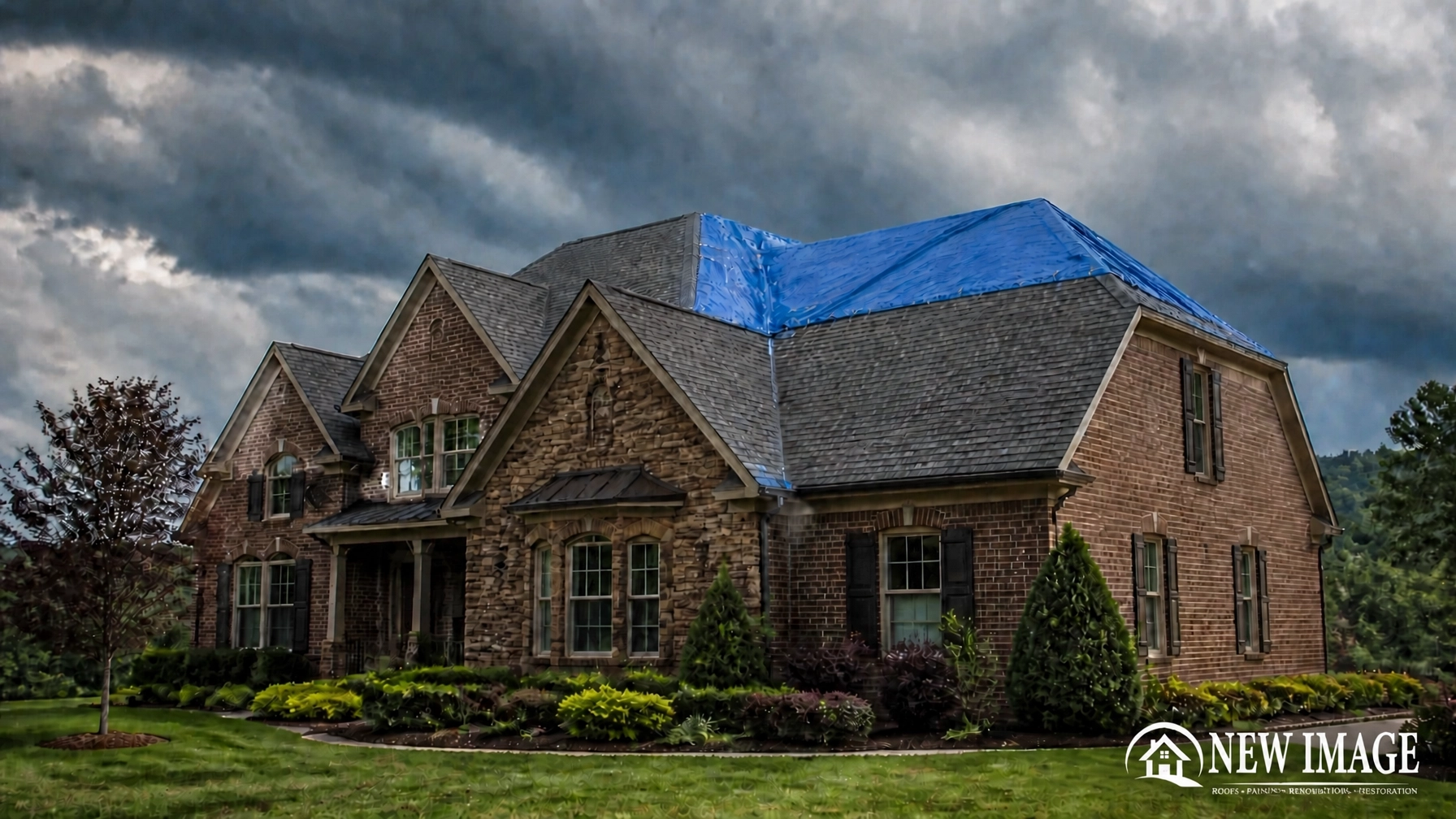
1. Prevent additional damage safely. If water is entering, protect belongings and use containers to catch drips. A qualified contractor can install temporary roof tarping or secure a damaged opening. Avoid climbing, cutting fallen trees, or attempting repairs near electrical hazards.
2. Contact your insurance company promptly. Report the loss, request a claim number, and ask what emergency measures your policy requires or covers. Policies differ, and coverage depends on your specific terms, limits, exclusions, and deductible. The Georgia Office of the Commissioner of Insurance offers claim tips.
3. Keep a record of the claim. Save photos, videos, receipts, estimates, emails, and text messages. Keep notes of calls, including the date, who you spoke with, and what was discussed. Make an inventory of damaged belongings with descriptions and approximate purchase dates when available. FEMA also explains what information you may need for a home insurance claim.
4. Arrange a professional inspection. A roofing professional can assess the roof and related exterior components, document visible conditions, and identify areas that may need prompt protection. Ask for a written, itemized assessment. Your contractor can provide findings, but your insurer determines coverage under your policy.
5. Coordinate permanent repairs. Temporary measures may be necessary to prevent additional damage, but talk with your insurer about inspection and documentation before authorizing major permanent work. Keep records of any emergency work completed.
Be cautious when choosing a storm-damage contractor
Storms often bring an influx of contractors offering quick repairs. Some may be legitimate, but high-pressure tactics deserve caution. Be wary if someone demands an immediate signature, makes a promise about what your insurer will pay, asks you to sign documents you do not understand, or offers to waive your deductible.
Before hiring anyone, ask for proof of insurance, a written scope of work, references, and clear payment terms. Make sure you know who will perform the work and who to contact after the job. You have the right to choose your contractor; you should not feel rushed into a decision at your door.
New Image is locally owned and operated, serving Northwest Georgia communities including Marietta, Dallas, Cartersville, Douglasville, and Cedartown. Our team provides honest inspections without high-pressure sales, works with trusted roofing materials from Owens Corning, GAF, CertainTeed, and IKO, and backs its work with industry-leading warranties. We have more than 600 five-star reviews. Learn more about protecting your property with our seamless gutter services.

When should you call for a professional inspection?
Arrange an inspection promptly if you see missing or lifted shingles, a leak or new ceiling stain, visible roof impact marks, a fallen limb on the home, detached gutters, damaged siding, or a broken window. Even if there is no active leak, hidden damage can worsen with the next rainfall.
If you need roof repair in Cobb County or storm damage restoration elsewhere in Northwest Georgia, a professional assessment can help you understand what needs attention and what can wait. Early documentation and safe temporary protection can reduce uncertainty while you work with your insurer.
A storm may leave you with difficult decisions, but you do not have to make them alone. Careful documentation, prompt action, and a trustworthy local contractor can help you protect your home and plan repairs with confidence. Call New Image at 678.444.4901 for a free storm damage inspection.
#NewImageRoofs #NewImagePainting #NewImageConstruction #NewImageRenovation #NewImageRestoration #SouthMark #NewImageAI